Minecraft Circular Base Designs: 7 Incredible Ideas for Survival

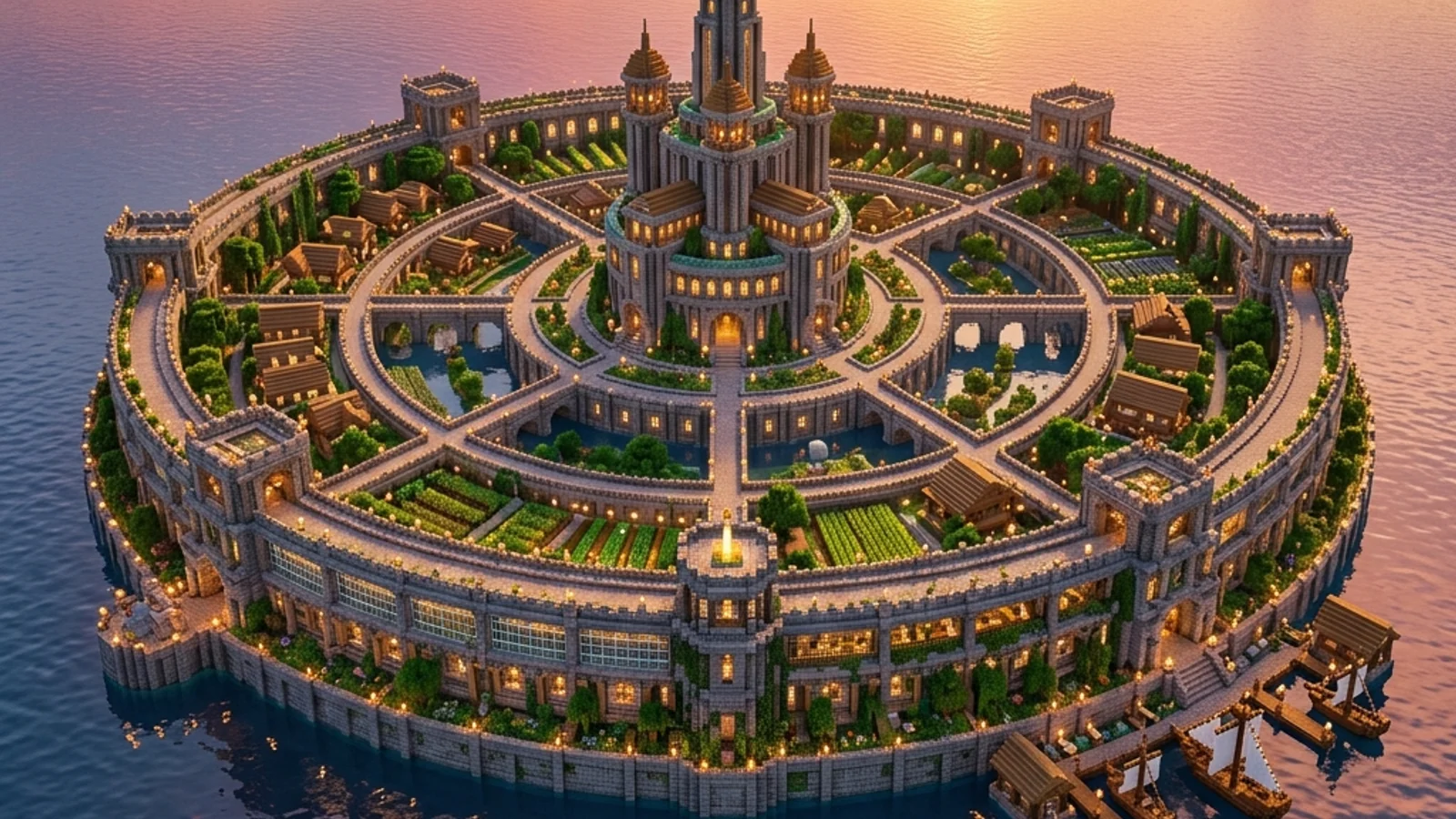
Minecraft circular base designs represent the pinnacle of architectural achievement in a game fundamentally composed of cubes. When you build with curves, you instantly elevate your world from standard grid-based blockiness to awe-inspiring, organic architecture. Whether you are constructing a towering wizard spire, a sprawling underwater biodome, or a majestic suspended sky ring, circular architecture is the key to creating a masterpiece. This masterclass guide will dive deep into the ultimate designs you can deploy in your next survival or creative world, providing unparalleled insights into layout, block palettes, and spatial efficiency.
Building circles in a voxel environment has always been notoriously challenging. Miscount a single block on a massive diameter, and the entire structure becomes permanently lopsided. Thankfully, tools like the MineCircles circle generator have completely eliminated this hurdle. By generating perfect pixel grids, you can map out enormous foundations effortlessly. Armed with this precision, there is absolutely no limit to the scale and complexity of the circular bases you can create.
In this comprehensive guide, we will explore seven distinct, incredible Minecraft circular base designs. Each of these templates offers a unique aesthetic and functional advantage. From the depths of the ocean to the peaks of extreme hills, a circular footprint provides 360-degree panoramic views, highly efficient central storage systems, and a striking visual presence that square buildings simply cannot replicate. Let's delve into the ultimate masterclass of circular architecture.
Why Choose Minecraft Circular Base Designs?
Before we jump into the specific designs, it is crucial to understand why Minecraft circular base designs are structurally and aesthetically superior to traditional square or rectangular builds. First and foremost, a circle maximizes interior floor space relative to its perimeter. This means you use fewer blocks for the outer walls while gaining more room for farms, storage, and living quarters. When you are surviving in a hardcore world and resources are scarce, this mathematical efficiency becomes a tangible advantage.
Furthermore, circular bases naturally foster centralized layouts. The core of your base becomes a nexus point—often a central storage silo, a beacon, or a grand spiral staircase—with various functional wings radiating outward like the spokes of a wheel. This radial symmetry dramatically reduces travel time between different sections of your base. You can transition from your automated smelting array to your enchanting setup in mere seconds, all while enjoying a visually cohesive interior design.
Finally, the sheer visual impact of a circular structure cannot be overstated. In a landscape dominated by harsh angles and jagged cliffs, a smooth, sweeping curve commands attention. It demonstrates a mastery over the voxel medium. When you show off a massive glass dome or a perfectly spherical floating island to your friends or server mates, you immediately establish yourself as an elite builder.
1. The Oceanic Biodome Hub
One of the most iconic Minecraft circular base designs is the Oceanic Biodome Hub. Submerging a massive glass hemisphere beneath the waves provides an unparalleled atmosphere. With a circular footprint, the water pressure is theoretically distributed evenly, leaning into a realistic architectural concept. The panoramic views of coral reefs, passing squids, and the eerie glow of sea pickles make this base an immersive masterpiece.
Materials and Block Palette
To execute the Oceanic Biodome correctly, you must rely heavily on transparent blocks. Cyan, light blue, and regular glass blocks (or glass panes for added depth) are essential. For the structural ribs framing the glass, smooth quartz, prismarine bricks, or dark oak logs provide an excellent contrast against the ocean backdrop. If you are building in a warm ocean biome, incorporating stripped mangrove logs can add a vibrant, tropical flair to the structural supports.
Lighting is a critical factor underwater. You cannot rely on torches, and lanterns can look out of place when spammed. Instead, integrate sea lanterns, froglights, or end rods directly into the floor and structural pillars. A central conduit is not only a functional necessity for underwater breathing and mining speed, but it also serves as a brilliant, pulsing centerpiece for the entire biodome.
Construction Strategy
Constructing a biodome requires meticulous planning. Begin by generating a massive circle template—typically a diameter of 41 or 51 blocks—using our pixel circle generator. A critical tip is to always use an odd number for the diameter. This ensures you have a single center block, making it infinitely easier to align your central conduit or beacon beam.
Once the foundation ring is laid on the ocean floor, you must build the dome layer by layer. This involves generating progressively smaller circles and stacking them to form a hemisphere. If you are struggling with the exact dimensions, consult our sphere building guide. The most tedious aspect is draining the interior. The highly recommended strategy is to fill the completed dome entirely with sand or gravel, then use the torch trick to break columns instantly from the bottom up, or segment the interior with sponge walls.
2. The Suspended Sky Toroid
For builders seeking a futuristic or fantasy aesthetic, the Suspended Sky Toroid—a massive, floating ring structure—is an absolute showstopper. Among Minecraft circular base designs, the toroid (donut shape) is arguably the most challenging to visualize and construct, but the resulting megastructure is breathtaking. It resembles a space station or a magical enclave hovering above the clouds.
Achieving Perfect 3D Symmetry
Building a toroid is exponentially more difficult than building a simple cylinder. You are essentially dealing with two circular profiles: the massive horizontal ring that forms the overall shape, and the smaller vertical cross-section that forms the tube itself. To build this flawlessly, you need to understand advanced voxel geometry. We highly recommend reading our deep dive into the mathematics of toroids before attempting this build on a massive scale.
The best approach is to build a wireframe first. Construct the primary horizontal circle outline at the center elevation, then build four circular cross-sections at the cardinal directions (North, South, East, West). Once these guide rings are perfectly positioned, you can slowly begin interpolating the curves between them, filling in the outer shell. Working in quadrants is essential; build one quarter of the toroid perfectly, then mirror that geometry to the remaining three sections.
Interior Layout and Flow
The interior of a toroid presents unique interior design challenges. Because the floor curves both longitudinally and transversely, finding flat surfaces for chests, beds, and crafting stations can be difficult. The solution is to install a flat, recessed floor running along the bottom interior curve, essentially creating a long, continuous hallway that loops back on itself.
Divide this endless corridor into dedicated functional zones. One section can house an automated crop farm utilizing water streams, while another section serves as a high-density storage array. To traverse the ring quickly, consider installing an ice boat track or an intricate rail system hidden beneath the floorboards. The visual continuity of sprinting down a curved hallway that seems to stretch on infinitely is an incredibly satisfying experience.
3. The Tiered Wizard Spire
Moving back to terra firma, the Tiered Wizard Spire is a staple of fantasy architecture. When evaluating vertical Minecraft circular base designs, the spire is king. Unlike a basic cylindrical tube, a masterful wizard spire utilizes tiered circular foundations that progressively decrease in diameter as the tower ascends, creating a sleek, tapered silhouette reminiscent of ancient magical academies.
To pull off this design, you will need to generate multiple circle blueprints. For example, your ground-level foundation might have a diameter of 25. After ascending 15 blocks, you taper the walls inward and transition to a circle with a diameter of 19. Another 15 blocks up, you taper again to a diameter of 13, eventually culminating in a pointed, conical roof. This stepping technique creates robust ledges and balconies that wrap around the exterior of the tower.
The primary block palette for a wizard spire typically revolves around stone bricks, deepslate tiles, and striking roof materials like oxidized copper, purpur blocks, or warped planks. The contrast between the dark, sturdy foundation and the vibrant, magical hues of the conical roof is visually stunning. Inside, the tower demands a grand spiral staircase hugging the inner wall, wrapping gracefully around a central pillar of enchanting tables, brewing stands, and bookshelves.
4. The Underground Concentric Bunker
Not all bases need to dominate the skyline. For a stealthy, high-tech approach, the Underground Concentric Bunker is unparalleled. This design involves carving massive circular chasms deep underground, exposing the bedrock or deepslate layers. The layout relies on concentric rings radiating from a central core, separated by deep trenches, lava moats, or glass-covered drops.
Excavation and Preparation
The hardest part of this build is the sheer volume of excavation required. You must clear out a massive cylinder extending from the surface down to negative Y-levels. Using a beacon with Haste II and an Efficiency V pickaxe is mandatory. Alternatively, if you are proficient with redstone, deploying a flying machine world-eater can clear the perimeter automatically. Once the massive cylindrical cavern is hollowed out, you can begin constructing the floating concentric rings.
The Panopticon Layout
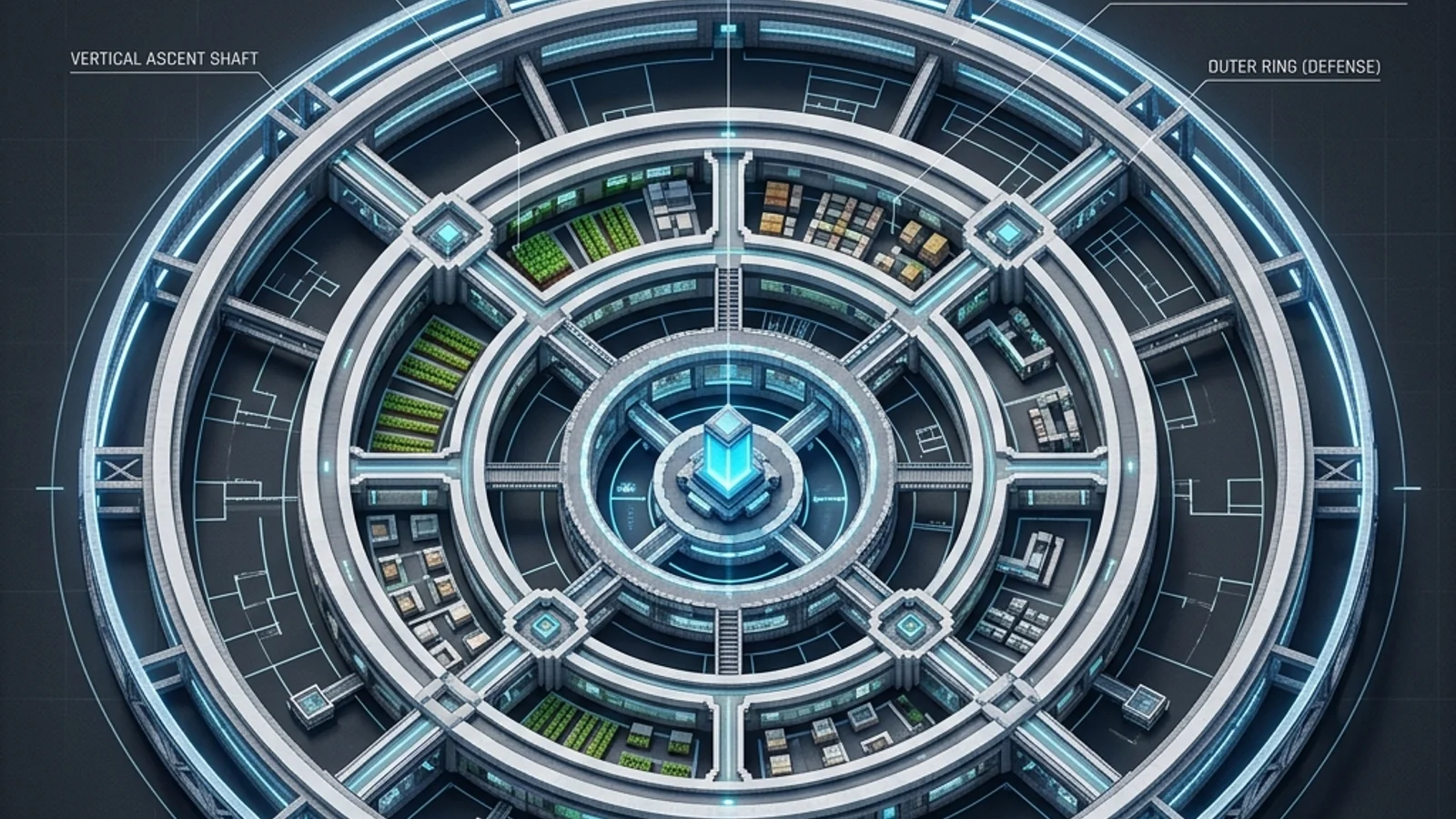
The beauty of this design lies in its "Panopticon" layout. Place your primary storage and crafting hub in the dead center, on a floating circular platform. Surround this core with a gap—perhaps bridged by extending glass walkways—and then build an outer ring dedicated to automated farming, villager trading halls, and mob grinders. By standing in the central hub, you have a 360-degree, unobstructed view of every single facility in your base. The efficiency and visual control this offers are unmatched by any other layout.
5. The Oasis Ellipse Compound
While perfect circles are breathtaking, sometimes a landscape calls for an elongated shape. Among advanced Minecraft circular base designs, the elliptical or oval compound is perfect for fitting structures into narrow valleys, along riverbanks, or nestled within desert dunes. The Oasis Ellipse utilizes sweeping, extended curves to create a sprawling, luxurious estate.
An ellipse consists of two focal points rather than a single center, meaning it is longer on one axis and narrower on the other. Generating an ellipse manually is a nightmare of mathematics, but our circle generator handles it effortlessly with width and height parameters. Once the foundation is laid, an elliptical compound is fantastic for enclosing large, sprawling features like custom lakes, botanical gardens, and sprawling animal pastures.
In a desert biome, an elliptical base built from smooth sandstone, cut sandstone, and terracotta mimics the look of a grand oasis palace. Incorporate flowing water channels, lush jungle leaves, and vibrant glazed terracotta floors to contrast the harsh, arid surroundings. The elongated interior is perfectly suited for long halls, grand dining rooms, and expansive art galleries, making it a favorite for players who prioritize aesthetics and roleplay.
6. The Volcanic Caldera Ring
If you prefer a villainous, imposing aesthetic, the Volcanic Caldera Ring is the ultimate fortress. This design involves finding (or creating) a massive mountain or volcano and building a circular ring base suspended directly inside the crater, hovering ominously over a churning lake of lava. The juxtaposition of precise circular geometry against jagged, chaotic natural terrain creates incredible visual tension.
The block palette for a caldera base should be dark, brutalist, and imposing. Deepslate bricks, blackstone, basalt, and crying obsidian are the materials of choice. Accents of netherrack, magma blocks, and flowing lava falls integrate the structure into the environment. The base itself can be designed as a thick, hollow ring housing the player's facilities, with massive diagonal chains or support beams anchoring the ring to the jagged walls of the crater.
Lighting this build requires careful thought. You want to maintain a dark, moody atmosphere while preventing hostile mob spawns. Hiding light sources under slabs, behind stairs, or beneath carpets is crucial. The ambient orange glow from the lava below will illuminate the underside of the ring, casting dramatic shadows and highlighting the menacing silhouette of your circular fortress.
7. The Subterranean Cylinder Base
The final entry in our showcase of elite Minecraft circular base designs is the Subterranean Cylinder Base, often affectionately termed the "Missile Silo." This design is a vertical inversion of the wizard tower. Instead of building upward into the sky, you carve a massive, perfect cylinder straight down into the earth, culminating in a sprawling underground complex.
The walls of this vast cylindrical shaft must be carefully detailed. Leaving raw stone is unacceptable for a master builder. You must line the walls with a cohesive pattern—perhaps alternating rings of polished andesite, sea lanterns, and tinted glass. The descent is typically handled via a central water drop, a grand sweeping staircase attached to the outer wall, or an intricate redstone elevator system.
As you descend deeper, the cylinder can expand outward, revealing hidden rings of infrastructure tucked into the cavern walls. Because the entire base is completely encapsulated by bedrock and deepslate, it offers maximum security on multiplayer servers while providing a sleek, highly organized, and modular living space. The sheer verticality of a 100-block deep cylindrical shaft is awe-inspiring to behold from the surface.
Pro Tips for Circular Base Interiors
Designing the exterior of a circular base is only half the battle. The interior presents unique challenges that trip up even experienced builders. When working with curves, traditional square grids for chests and farms can look awkward and forced. Here are masterclass tips for handling circular interiors.
Navigating Storage Systems
A sprawling, messy storage room ruins the sleek aesthetic of a circular base. The key is to build radial storage arrays. Place a central pillar or beacon in the exact middle of the room, and arrange your chests, barrels, and shulker boxes in concentric rings facing inward. This creates an amphitheater of storage. For automated sorting systems, redstone can be tricky to curve. The best approach is to build the sorting mechanics in segmented, straight lines that roughly approximate an octagon or dodecagon, hiding the jagged corners behind curved interior walls.
Curving Hallways and Transitions
When connecting different circular pods or rings, the transitional hallways must flow seamlessly. Avoid sharp 90-degree turns. Instead, use diagonal corridors or gentle, sweeping arcs to connect rooms. The floor patterns play a massive role in guiding the player's eye. Use concentric rings of varying blocks—such as a border of dark oak surrounding a floor of birch planks—to emphasize the curvature of the room and draw the focus toward the center.
Conclusion
Mastering Minecraft circular base designs is a transformative step in any builder's journey. By moving away from the rigid, grid-based thinking that defines early-game survival huts, you unlock a world of breathtaking architecture, spatial efficiency, and striking visual dominance. Whether you are constructing a high-tech underground silo or a floating magical toroid, the principles of symmetry, radial layout, and careful block palettes remain the same.
Remember that these ambitious projects require patience and precision. Always utilize tools like our Minecraft circle generator to lay flawless foundations, and consult our extensive circle thickness chart to ensure your walls have the appropriate depth and weight. Embrace the curve, challenge your building skills, and transform your Minecraft world into a true architectural masterpiece. For further inspiration, be sure to check out the official Minecraft building tutorials and keep pushing the boundaries of what is possible in voxel space.
References & Sources
Levi
Minecraft Architect & Hardware Expert
Levi is a professional Minecraft architect, veteran PC builder, and open-world enthusiast. He specializes in voxel geometry, hardware benchmarking, and engine analysis - ensuring readers can build flawlessly and run next-gen titles at maximum settings. He also publishes on Specvi.com and LeonidaInsider.com.
Related Articles
Minecraft Cylinder Guide: 9 Epic Tricks for Perfect Builds
Master your next build with our definitive Minecraft cylinder guide. Learn 9 epic tricks, expert strategies, and advanced techniques.
June 27, 2026Advanced Minecraft Circle Generator Tricks: 7 Insane Secrets for Perfect Builds
Master your builds with these 7 insane Advanced Minecraft Circle Generator Tricks. Learn algorithms, voxel manipulation, and organic shapes.
May 22, 2026The Geometry of Minecraft Catenary Curves
Deep dive into the mathematics and voxel plotting algorithms for sagging cables, ropes, and suspension bridges.