Choosing the right material can make or break your Minecraft dome build. While the shape and size of your dome are important, the block you choose determines whether your curved structure looks smooth and professional or blocky and awkward. In this comprehensive guide, we'll compare the best materials for dome building and help you select the perfect blocks for your project.
Whether you're building an observatory, underwater base, greenhouse, or architectural showpiece, the material you select affects visibility, texture continuity, lighting, and overall aesthetic. Let's dive into the top choices for building domes in Minecraft.
What Makes a Good Dome Material?
Before we look at specific blocks, it's important to understand what characteristics make a material ideal for curved structures like domes. These factors will help you evaluate any block for dome-building potential:
- Texture smoothness: Blocks with subtle or repeating textures hide the stepped edges of curves better than blocks with distinct patterns.
- Color uniformity: Single-color or low-contrast blocks create a cohesive surface that emphasizes shape over texture.
- Light interaction: How the block interacts with lighting affects whether curves are highlighted or obscured.
- Availability: Can you gather enough of this material for a large dome? Some blocks are rare or require extensive farming.
- Thematic fit: The material should match your build's style—a medieval castle needs different materials than a futuristic base.
Top Materials for Minecraft Domes
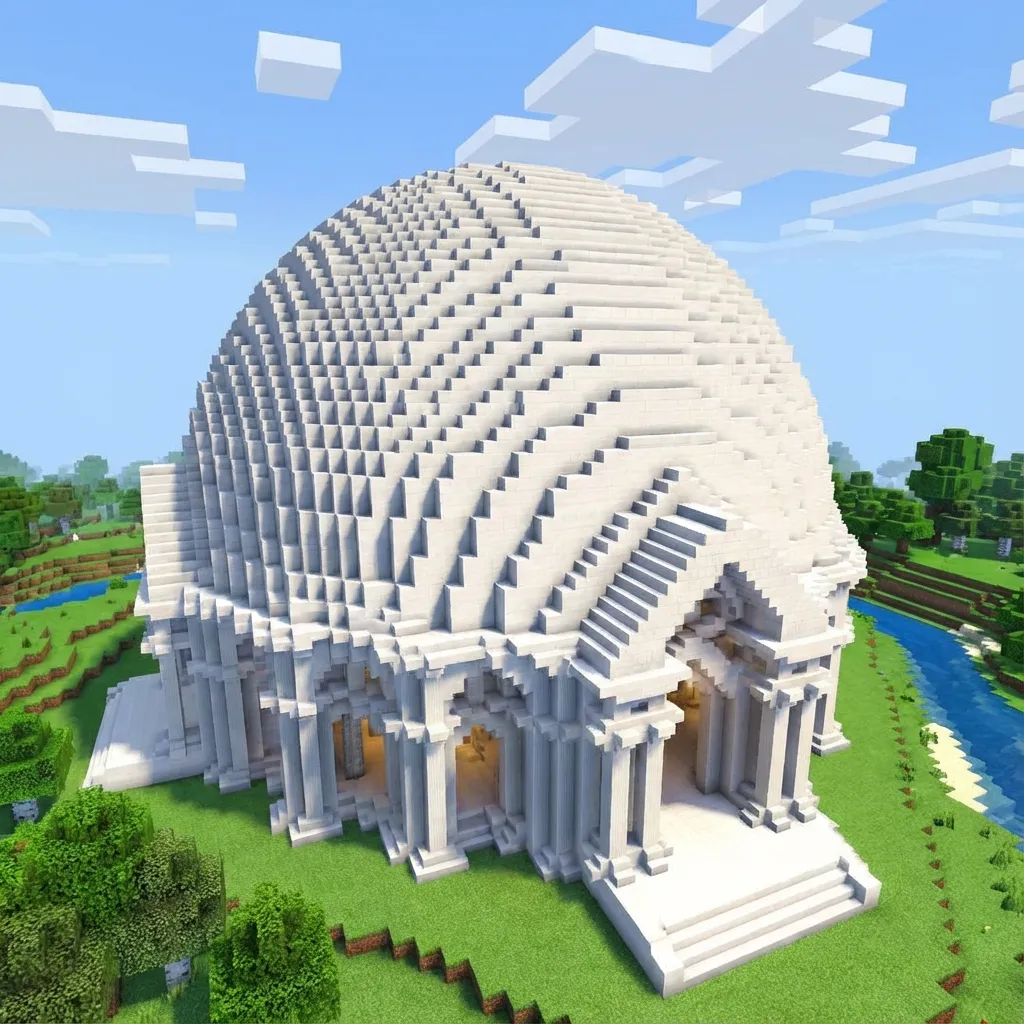
Smooth quartz is widely considered the best material for Minecraft domes. Its perfectly uniform white surface creates seamless curves that catch light beautifully. The complete absence of texture patterns means there are no visual distractions from your dome's shape.
Quartz domes work exceptionally well for modern architecture, Greek-inspired temples, futuristic builds, and any project where you want the shape to be the star. The bright white color also means interior lighting will reflect well, keeping the inside of your dome bright.
Concrete offers 16 vibrant colors with a smooth, matte texture that rivals quartz for curve visibility. Unlike concrete powder, solid concrete has no texture grain, making it excellent for domes. The color variety means you can build domes in any palette.
White and light gray concrete are popular quartz alternatives that are easier to mass-produce. Colored concrete opens creative possibilities—imagine a rainbow dome or color-coded sections. The only downside is that concrete doesn't occur naturally; you'll need sand, gravel, and dye.
Prismarine blocks have a unique animated texture that shifts between turquoise and aqua colors. While this animation might seem distracting, it actually helps hide the stepped edges of dome curves, creating an almost magical shimmer effect.
Dark prismarine provides a more subdued option with its deep teal color. Both varieties are thematically perfect for underwater bases, ocean-themed builds, and anything with an aquatic aesthetic. Prismarine is obtained from ocean monuments, making large quantities require some effort to gather.
Unglazed terracotta offers warm, earthy tones that work beautifully for Mediterranean, desert, or historical dome styles. The subtle texture adds character without overwhelming the dome's shape. Orange, brown, and white terracotta are particularly popular for dome construction.
Glazed terracotta features intricate patterns that can create stunning decorative effects when rotated strategically. However, the complex patterns can compete with the dome shape on smaller builds. Use glazed terracotta for large domes where the patterns enhance rather than distract.
The polished variants of Minecraft's stone types offer a nice middle ground between the pure smoothness of quartz and the texture of natural stone. Polished diorite's light gray-white color makes it an excellent quartz alternative that's much easier to obtain.
Polished andesite provides a neutral gray that works for industrial and modern builds, while polished granite adds warmth with its pink-brown tones. All three are readily available through mining and can be crafted from their rougher counterparts.
Ready to Build Your Dome?
Generate perfect circles for every layer of your dome with our free tool.
Open Circle Generator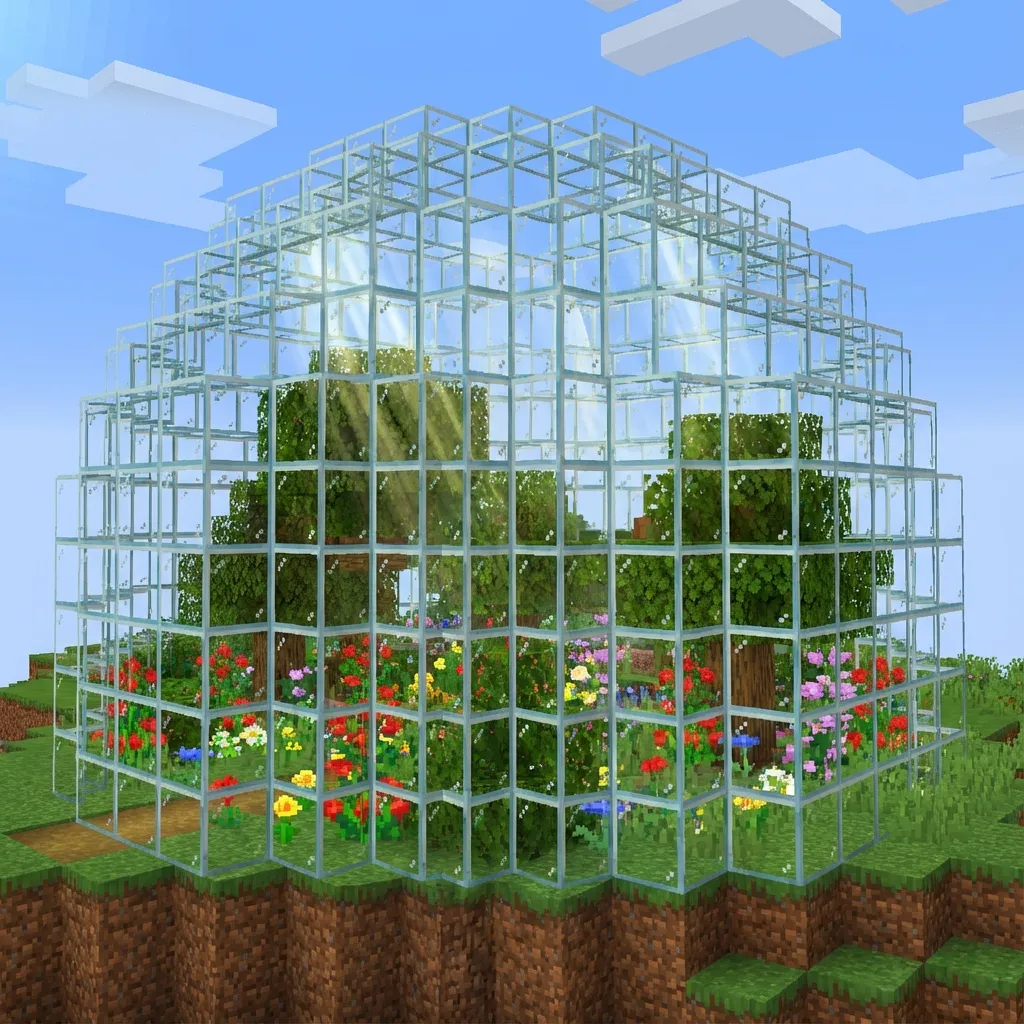
Transparent Materials for Glass Domes
Glass domes deserve special attention. They allow light through, showcase interiors, and create stunning visual effects—but they come with unique challenges.
Glass domes let natural light flood your interior and allow you to see the sky or underwater views depending on your build location. Regular glass is colorless and maximizes visibility, while stained glass adds color filtering effects.
The main challenge with glass domes is that the seams between blocks are very visible due to glass's transparency. Consider using glass panes in combination with solid blocks to create framed sections, or embrace the grid pattern as part of your aesthetic.
💡 Pro Tip
Place connected glass blocks rather than isolated ones. Connected glass textures blend together, reducing visible seams and creating a smoother appearance.
Special Effect Materials
Copper Blocks (Oxidation States)
Copper offers a unique opportunity for domes that change over time. Fresh copper has an orange-brown color, but it gradually oxidizes through stages to eventually become a beautiful turquoise-green—mimicking real-world patina on copper domes like the Statue of Liberty.
You can build a dome and let it age naturally, wax sections at different oxidation stages for a varied look, or use lightning rods to control the oxidation process. This material is perfect for builds where you want an evolving, living aesthetic.
Sea Lanterns & Glowstone
For domes that need to glow, sea lanterns and glowstone are your primary options. Sea lanterns have a smoother, pulsing texture that works better for curved structures. Glowstone's speckled texture can be distracting on dome surfaces but works well when integrated into larger patterns.
Consider creating domes with occasional glowing blocks scattered throughout a non-glowing material for a starfield effect, or use full glow blocks for alien or magical aesthetics.
Materials to Avoid
Some blocks don't work well for domes. Here's what to skip:
- Cobblestone: Heavy, irregular texture fights against smooth curves
- Dirt/Grass: Wrong aesthetic for most dome styles
- Wood Planks: Grain direction becomes obvious and distracting on curves
- Bricks: The horizontal lines conflict with curved surfaces
- Bookshelf blocks: Pattern is very recognizable and disrupts the dome shape
Material Comparison Table
| Material | Best For | Difficulty | Style |
|---|---|---|---|
| Smooth Quartz | Modern, temples | Medium | Clean, bright |
| Concrete | Any build | Easy | Versatile |
| Prismarine | Underwater bases | Hard | Oceanic |
| Polished Diorite | Classical builds | Easy | Elegant |
| Terracotta | Desert/Mediterran | Easy | Warm, earthy |
| Copper | Dynamic builds | Medium | Industrial/aged |
| Glass | Greenhouses | Medium | Transparent |
Final Recommendations
For your first dome, we recommend starting with white concrete or smooth quartz. These materials are forgiving, look great from any angle, and make any construction mistakes easy to spot and fix. As you gain experience, experiment with more textured or specialized materials.
Remember that larger domes look smoother regardless of material because the curves are more gradual. If you're working with a challenging material, increase your dome size to compensate. Use our circle generator to create accurate templates, and check out our guide on how to build spheres for detailed construction techniques.
Happy building!