While circles get most of the attention in Minecraft building, ovals (ellipses) are equally important for creating realistic structures. Many real-world buildings—from Roman colosseums to modern football stadiums—are oval, not circular. Knowing when to use an oval instead of a circle can elevate your builds from good to architecturally accurate.
In this guide, we'll explore why ovals matter, when they're the better choice, and how to use our oval generator to create perfect elliptical patterns for your Minecraft projects.
Understanding the Difference
Before diving into use cases, let's clarify what distinguishes ovals from circles:
Circle vs. Oval
⭕ Circle
Equal width and height. Every point on the edge is the same distance from the center. Perfect symmetry in all directions.
⬭ Oval (Ellipse)
Different width and height. Has a "long axis" and "short axis." Symmetrical across both axes but not radially.
Our generator lets you set width and height independently, creating any oval ratio you need. A ratio of 2:1 (width twice the height) creates a wide, stretched ellipse, while 3:2 creates a more subtle elongation.
When to Choose Ovals Over Circles
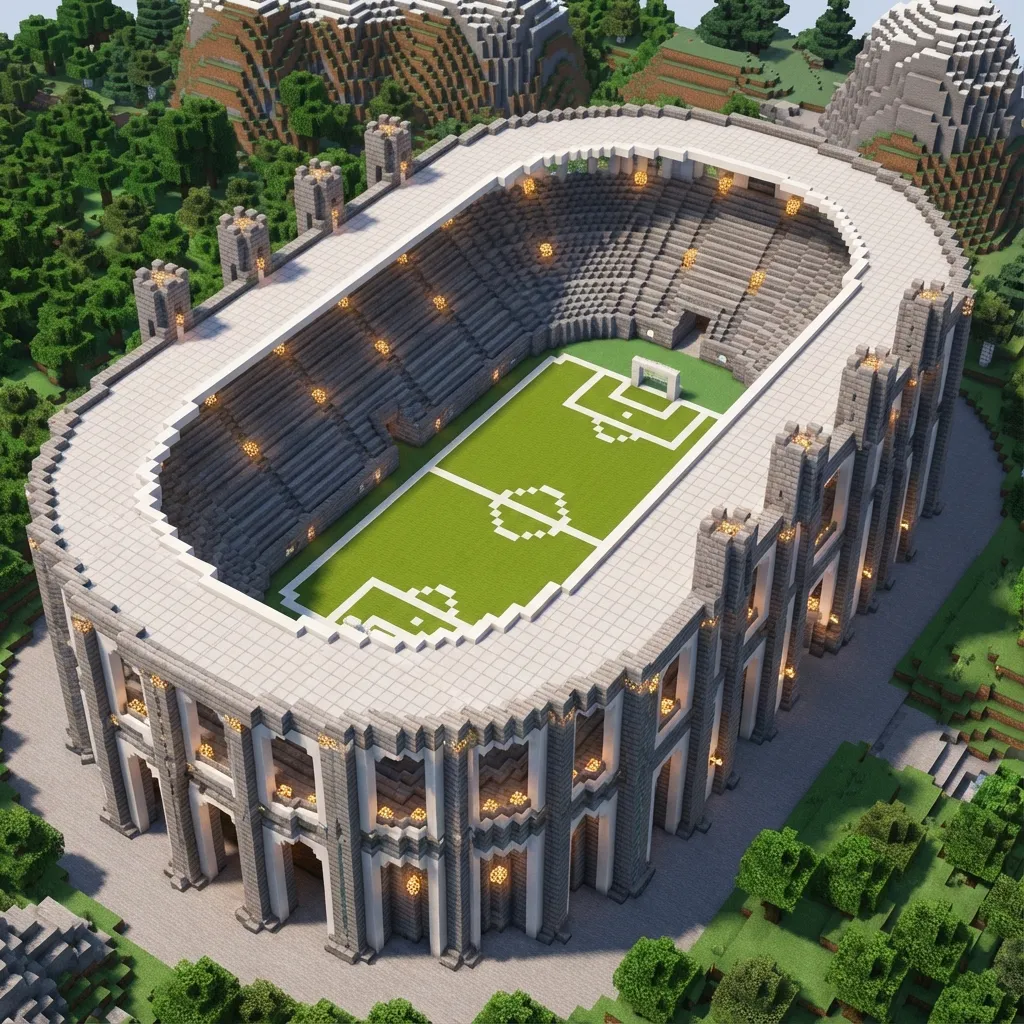
Most real sports stadiums are ovals, not circles. The elongated shape provides better viewing angles for spectators and allows for rectangular playing fields while maintaining curved seating. The Roman Colosseum, modern football stadiums, and running tracks are all oval.
An oval stadium feels more authentic and provides a better Minecraft experience for minigames and events. The longer axis gives more seating capacity while keeping everyone close to the action.
📐 Recommended Dimensions
- Small arena: 60×40 blocks (3:2 ratio)
- Medium stadium: 100×70 blocks
- Large colosseum: 150×100 blocks
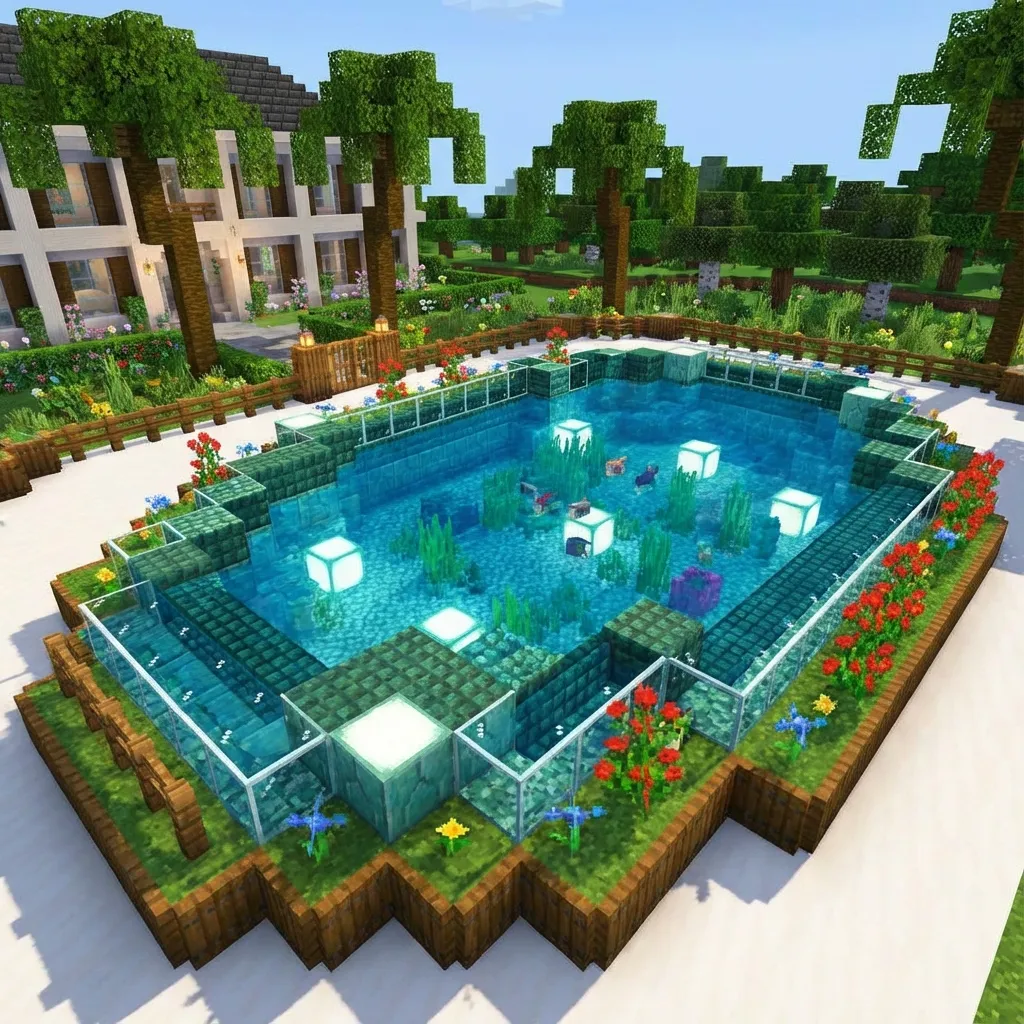
Luxury pools are rarely perfect circles—they're usually elongated ovals that fit better in backyards and gardens. Oval pools look more natural and provide a better swimming experience with a longer swim lane along the major axis.
For resort-style builds or mansion yards, an oval pool looks far more realistic than a circular one.
📐 Recommended Dimensions
- Small pool: 15×10 blocks
- Large resort pool: 30×18 blocks
- Olympic style: 50×25 blocks
Oval tables are a classic of elegant interior design. From diplomatic conference rooms to formal dining halls, oval tables seat more people than circles of similar width while maintaining the social roundtable dynamic.
For throne rooms or council chambers, an oval meeting table adds sophistication that rectangular or circular arrangements can't match.
📐 Recommended Dimensions
- Dining table: 9×5 blocks
- Conference table: 15×9 blocks
- Grand council: 21×13 blocks
Create Your Oval Pattern
Set custom width and height to generate perfect ellipses.
Open Oval GeneratorEvery proper racing track is an oval. The elongated shape creates two long straightaways for speed and two curves for the technical challenge. Whether you're building a horse track, a minecart derby, or a boat racing circuit, ovals are the correct shape.
Use nested ovals of different sizes to create the inner and outer track boundaries, with the racing surface in between.
📐 Recommended Dimensions
- Outer edge: 80×50 blocks
- Inner edge: 60×30 blocks (for 10-block wide track)
- Use "Thickness" setting to generate track bands
Oval mirrors and picture frames have been a staple of elegant interior design for centuries. Wall decorations built as ovals instantly add a touch of class to any room.
Build an oval frame on a wall using stripped logs or other decorative blocks, then fill the interior with glass panes for a mirror effect or with banners/maps for art.
📐 Recommended Dimensions
- Wall mirror: 5×7 blocks (portrait)
- Picture frame: 9×7 blocks
- Grand mirror: 11×15 blocks
How to Generate Ovals
Using our circle generator for ovals is straightforward:
- Select Oval from the shape options (or simply use circle with different dimensions)
- Set the Width to your desired horizontal dimension
- Set the Height to your vertical dimension
- Adjust thickness settings if you want just the outline
- The pattern updates instantly—build from the grid!
💡 Common Oval Ratios
3:2 ratio (like 30×20) creates subtle elongation. 2:1 ratio (like 40×20) creates distinctly stretched ovals. For most builds, 3:2 or 4:3 ratios look most natural.
Oval vs. Circle: Quick Decision Guide
| Use Case | Best Shape | Why |
|---|---|---|
| Tower base | Circle | Uniform strength, easier construction |
| Stadium seating | Oval | Fits rectangular field, better views |
| Fountain | Circle | Symmetrical spray patterns |
| Swimming pool | Oval | More realistic, better swimming lanes |
| Dome ceiling | Circle | Structural symmetry required |
| Race track | Oval | Allows straightaways and curves |
| Pixel art sun | Circle | Sun is spherical |
| Face shape in art | Oval | Human faces are oval |
💡 Remember
There's no wrong choice—ovals and circles are both valuable tools. The best builders know when each shape serves their design better.
Combining Ovals with Other Shapes
Ovals work beautifully when combined with other shapes:
- Oval + rectangle: Stadium with rectangular end zones
- Multiple ovals: Concentric race tracks or tiered seating
- Oval + half-circles: Complex hybrid arena designs
- Overlapping ovals: Figure-8 racing circuits or decorative patterns
Our generator handles all these variations. Experiment with different dimensions to find the perfect oval ratio for your project!